Adaptive vs dynamic QR codes: dynamic is not a decision at the scan
A dynamic code lets you change the destination after it is printed. An adaptive code, in their telling, makes a routing decision at the moment of the scan.
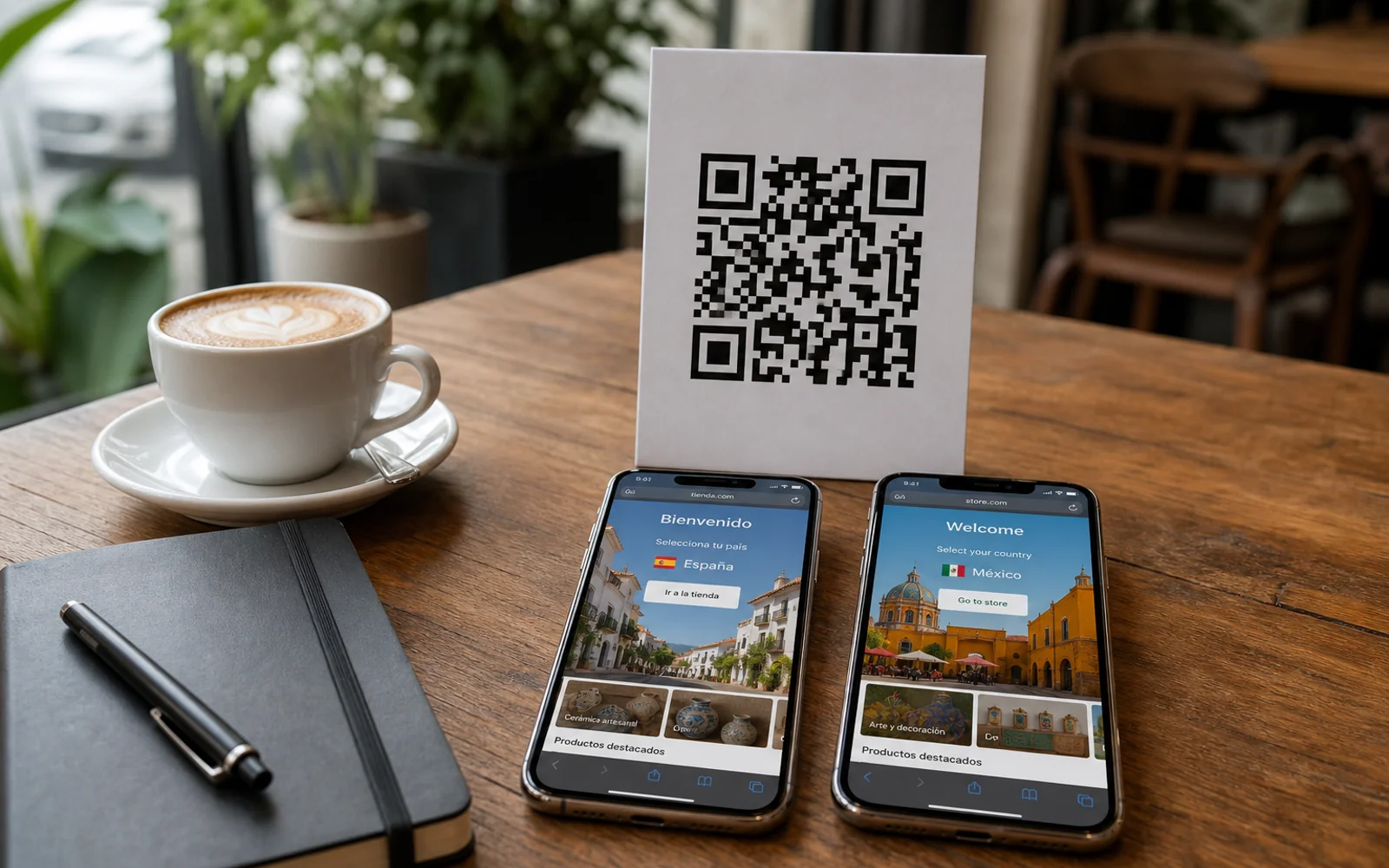
This week URLgenius started selling “Adaptive QR Codes.” Their split is useful, even if the branding is theirs.
A dynamic code lets you change the destination after it is printed. Every scan still goes to the same place until you change it. An adaptive code, in their telling, makes a routing decision at the moment of the scan: language, market, device, OS, whether the app is even available.
UQR already does the first thing. Codes are editable. Print once, change the page later. We also already do one kind of the second thing: geo redirects, at scan time, on Pro. Country only. A scan from Spain can open a different URL than a scan from Mexico. That is not “another editable destination.” It is a branch.
We do not do the rest of their list. No language. No city or region routing (we log those for analytics; they do not pick the URL). No device rules on geo. No “is the app installed.” No time of day. If we cannot see a country, you get the main URL. If a campaign needs the German site for German-locale phones sitting in France, geo will not save you. That is the gap. It is real. It is not a feature we are announcing.
What we actually ship
- Edit the destination after printing. Every plan, including Free.
- Unlimited scans. No ads on the scan path. Downgrade, never suspend.
- Geo redirects by country, at scan time. Pro ($20/mo, $160/yr). Same path on website QR codes and standalone short links. Not on other QR types.
- A separate app-download code that sends iPhone to the App Store URL, Android to Play, everyone else to a fallback. Store links, not install detection. Not combinable with geo. That is not a rule engine.
What we do not ship: language routing, city/region routing, time of day, install status, or “open the app if they have it.” Do not write those as if they are on the roadmap.
Why the word “dynamic” got small
Vendors needed a way to say “one printed code, many possible URLs” without sounding like everyone else who already said “dynamic.” So “adaptive” now means the branch, and “dynamic” gets demoted to a single shared destination. That is marketing. The useful sentence underneath is: did the code decide anything at scan time, or did you?
If you only need to swap a menu next month, edit the destination. If Spain and Mexico should not hit the same storefront, use geo. If the branch is language, or “open the app if they have it,” that is not us. Say so before someone prints a global code and hopes.