QR Codes That Survive the Printer Vendor
If the printer also hosts the scan destination, leaving the printer means reprinting the pack.
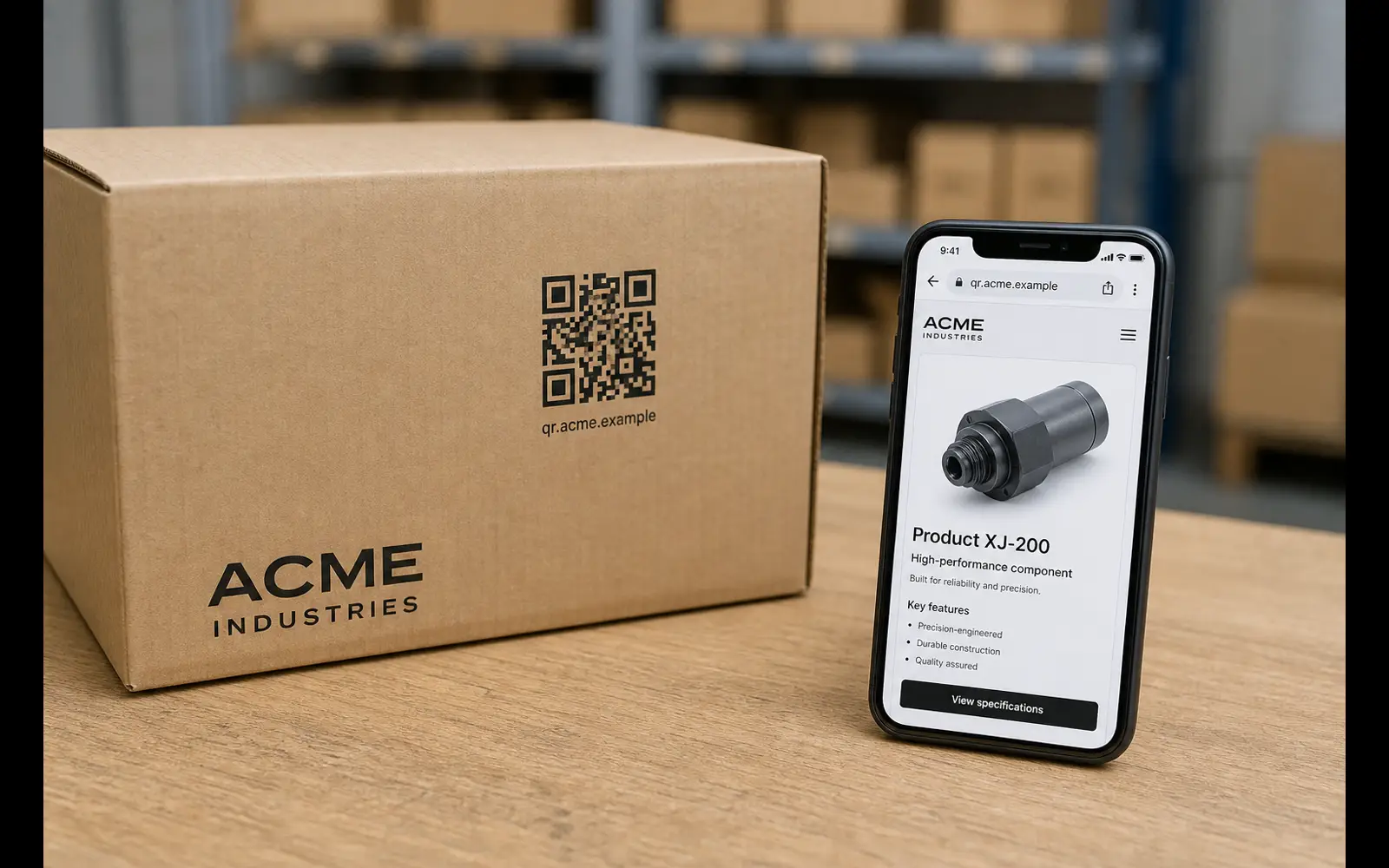
If the printer also hosts the scan destination, leaving the printer means reprinting the pack.
Coding vendors are selling the rest of the stack now, not just the ink. Markem-Imaje launched CoLOS 2D Activate and CoLOS 2D Engage in August 2026. SaaS for GS1 Digital Link QR codes, destination management, scan analytics, and a no-code consumer page, plus a factory-readiness assessment. IN Food (20 Aug 2026) wrote that the two products "combine QR-code management, production data, analytics, and digital content." Packaging Insights quotes the split: Activate is "URL destination management, scan data analytics, and enterprise data integration"; Engage lets marketing "design, publish, and manage personalized consumer experiences." Destination, analytics, and line software in one vendor. Fine while you stay.
That launch is still circulating ahead of PPMA Show, 22–24 September 2026, NEC Birmingham, and PACK EXPO International, 18–21 October 2026, Chicago. This is not a recap of either show. The useful question is what happens to the code on the pack if you change printers.
Sunrise 2027 is a checkout upgrade. Digital Link is optional. The printer-SaaS point is what happens after the ink is dry.
A closed stack is convenient until you leave
GTIN, lot, the code on the line, the landing page, and the scan report live in one place. You do not wire anything. You also cannot take the consumer URL with you. The print encodes a destination the vendor resolves. Leave, and that lookup is theirs. A new printer, a new agency, a new SaaS: the artwork still has their hostname in it. That is a reprint.
The layer that survives the vendor is an independent hostname and an editable destination. You own the name on the pack. You change where it goes without another plate. The line software can still print the symbol. A GS1 resolver can still sit in the till path if you need one. Those are different jobs. The consumer scan is a website in the code. That website should not die when the printer contract does.
We are that layer. We are not a GS1 resolver. We do not mint Digital Link URLs in the GS1 format. We do not sit in the till path. We do not replace line-side coding software. If the plant needs a Data Matrix with a raw GTIN, that is the coding vendor. If the pack needs a URL a phone can still open after a printer swap, that is a dynamic code on a hostname you control.
Lock-in of a different shape
Be honest about "independent." On Free and Lite the encoded URL lives on uqr.page. Those codes are locked to us. Leave, and you need a new resolver and a new print. There is no portable redirect export.
On Pro you can print on a hostname you own. The pack shows qr.yourbrand.com, not uqr.page. You hold the name. DNS still points at us. That is lock-in of a different shape: the printed string is yours, the lookup still terminates here. See custom domains and QR codes on your own domain.
If you cancel, you drop to Free. Existing codes keep resolving. Custom domains stay live on downgrade. Codes never expire in that sense. Unlimited scans on every plan including Free. No ads on scans. Public never-expire is non-payment, not company immortality. If we disappeared, uqr.page would die, and so would the customer CNAMEs we resolve. We do not ship a frozen map of every code. What happens if you cancel is the longer version.
Pricing, August 2026: Free $0, Lite $8/mo, Pro $20/mo, Business $49/mo. Custom domains and API/MCP are Pro. Bulk is Business.
Buy the ink from whoever runs the line. Do not print a destination that only lives inside their SaaS. Pin the hostname first. Wait until DNS is actually serving. Then send that file to the printer. A printed QR is not a programmable journey. It is a URL you can still edit after the truck leaves.